


Improve Efficiency with Simple Forecasting Methods for Everyday Packaging Products
For any warehouse or manufacturing operation, packaging is one of the most overlooked areas of cost management. Ordering packaging supplies in bulk can unlock significant savings, but only when it’s done strategically. Over-order, and you tie up valuable storage space; under-order, and you risk production delays.
In this article, TigerPak explains how to accurately forecast your packaging needs and reduce costs without compromising quality.
Why Bulk Packaging Makes Sense
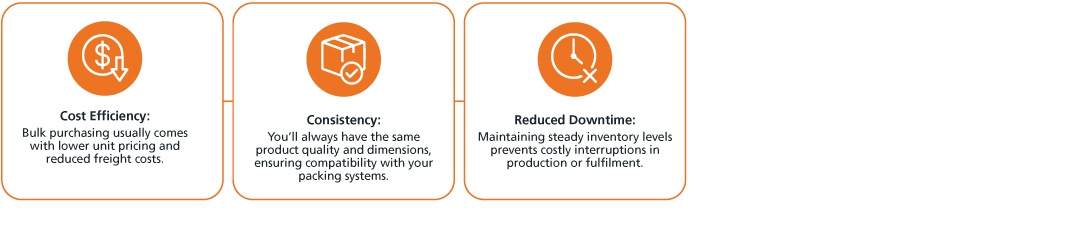
Buying in bulk offers three major advantages:
Step One: Analyse Historical Usage
Start by reviewing 6–12 months of packaging consumption data. Look at how many cartons, rolls of film, or tape you used in your busiest and quietest months. Create a simple spreadsheet tracking:
-
Product type (e.g., 500mm stretch film, 48mm tape)
-
Average monthly usage
-
Lead time from supplier to delivery
This helps you calculate an average monthly requirement and forecast peaks based on your business cycle.
Step Two: Account for Seasonal Peaks
Many Australian businesses experience spikes around EOFY, Christmas, and promotional periods. To prevent stock outs, plan to hold 20–30% additional inventory for those months.
For example, if you use 200 cartons a month normally, plan for at least 240–260 during peak periods.
Step Three: Balance Stock vs Storage
Storage costs are a major factor in bulk buying decisions. Evaluate how much warehouse space you can dedicate to packaging without reducing storage for saleable products.
Some suppliers, like TigerPak, offer scheduled delivery programs, allowing you to buy in bulk pricing but receive staggered shipments, freeing up space while maintaining price benefits.
Step Four: Standardise Where Possible
The more packaging variations you use, the harder it is to forecast accurately. By standardising your carton sizes, tape widths, and film gauges, you simplify purchasing and minimise the risk of stock imbalances.
Tip: Review your SKU list annually and consolidate overlapping packaging types.
Step Five: Negotiate Long-Term Supply Agreements
When you understand your usage patterns, you can approach suppliers for better pricing or fixed-rate contracts. Long-term agreements reduce exposure to price fluctuations and ensure consistent supply.
TigerPak offers competitive rates for bulk and contract supply, with guaranteed stock availability and reliable delivery timelines.
Step Six: Monitor and Review Regularly
Forecasting isn’t a one-time process. Regularly review usage versus forecast, particularly after major promotions or operational changes. Packaging usage can increase if you expand your product line, change your fulfilment model, or take on new clients.
Monthly or quarterly reviews help you catch trends early and adjust your inventory accordingly.
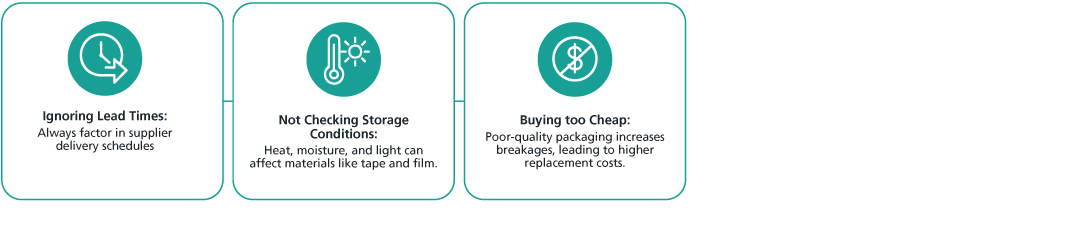
Common Mistakes to Avoid
Bulk packaging supply planning isn’t just about buying more, it’s about buying smarter. With the right forecasting, standardisation, and supplier partnership, you can reduce packaging costs while maintaining high operational performance.
TigerPak helps Australian businesses optimise their packaging procurement with bulk supply options, reliable delivery, and consistent quality.
Contact our team today to discuss your bulk packaging requirements or request a tailored supply plan that fits your warehouse needs.
Customer Testimonial:
"Could not be happier with TigerPak's range of products and their delivery times. They're our go to shop for all consumables at competitive rates!"
- Deirdre - Perth, WA.