

Practical tips, smart planning and the right supplies to keep your team safe when the temperature climbs
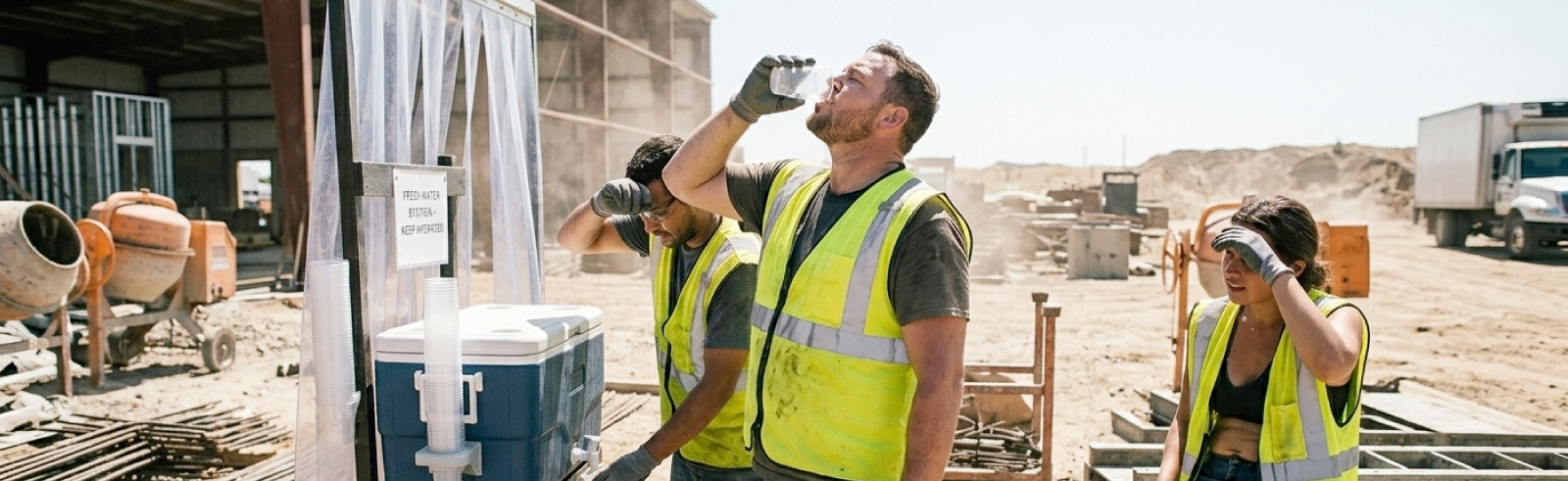
Australian summers don't mess around. On construction sites, in warehouses, on loading docks and out on farms, temperatures in the high 30s and 40s are common from December to March. Tin-roofed warehouses and open slabs can feel even hotter. Heat isn't just uncomfortable. It's a real workplace hazard that can lead to dehydration, heat exhaustion and potentially fatal heat stroke. The good news: with planning, the right habits and well-stocked sites, most heat-related illness can be prevented.
Know Your Obligations
Under Australian WHS laws, businesses must manage the risks of working in heat, the same as any other hazard. Safe Work Australia's guidance points to things like air temperature, humidity, air movement, how physical the work is, the clothing being worn and how long workers are exposed. Keeping your team cool isn't a nice-to-have. It's part of your duty of care.
Hydration: Little and Often
The most effective defence against heat illness is also the simplest: water. Don't wait until workers feel thirsty, because by then dehydration has already started.
-
Drink regularly. A good rule of thumb is a cup of water every 15 to 20 minutes during hot work, even when you don't feel thirsty.
-
Make water easy to get. Put cool drinking water close to where people are working, not a five-minute walk away.
-
Watch the extras. Energy drinks, soft drinks and too much caffeine can work against hydration.
-
Replace electrolytes. On long, sweaty shifts, electrolyte drinks help replace the salts lost through sweat.
-
Check the colour. Pale straw-coloured urine is a good sign. Darker urine means drink more.
Clean, well-stocked amenities also encourage people to take proper breaks. TigerPak's Washroom & Cafeteria range covers paper towels and dispensers, cleaning wipes and cleaning supplies, so break areas stay hygienic through the busiest months.
Work Smarter, Not Hotter
Good scheduling is one of the most powerful heat controls you have.
-
Start early. Move heavy physical tasks to the cooler morning hours.
-
Rotate tasks. Share the hardest jobs around so no one person carries the heat load all day.
-
Schedule shaded breaks. Regular rest in a cool, shaded area lets the body recover.
-
Acclimatise new starters. Workers who are new or returning from leave need time to adjust to the heat, so build up their workload gradually.
Cutting manual effort also reduces body heat. Using Trolleys & Dollies or Pallet Trucks & Lifts from our Materials Handling range means less lifting and carrying, and less strain on workers in the hottest part of the day.
Keep the Environment Cooler
Where you can, cut the heat at its source. Use fans and ventilation in warehouses, set up shade structures for outdoor areas, and shield work zones from direct sun. Light-coloured, loose-fitting, breathable clothing helps too, along with sun protection for anyone working outdoors.
Know the Warning Signs
Every worker should know how to spot heat illness in themselves and their mates.
Heat exhaustion can look like heavy sweating, dizziness, headache, nausea, muscle cramps and fatigue. Move the person somewhere cool, loosen their clothing, give them water and let them rest.
Heat stroke is a medical emergency. Watch for confusion, slurred speech, hot dry skin, collapse or seizures. Call 000 immediately and start cooling the person while you wait for help.
Being ready for an emergency is essential. Make sure every site has well-stocked First Aid Kits and Medical Supplies within easy reach. Check and restock them before summer starts, as cold packs and dressings are often used up quickly.
Make Heat Safety Visible
Reminders work. Clear Information & Notice Signs near break areas and entry points can prompt workers to drink water, take breaks and report symptoms. Warning & Danger Signs and Barrier Tapes can mark off zones with extreme heat exposure or restricted access during peak temperatures. A quick toolbox talk at the start of a hot day also helps keep heat safety front of mind.
Build a Summer-Ready Site
Before the heat arrives, run through a simple checklist:
-
Is cool drinking water available close to every work area?
-
Are shaded rest areas set up and easy to reach?
-
Are first aid kits fully stocked and checked?
-
Is heat safety signage up?
-
Do supervisors know the signs of heat illness and what to do?
Talk to TigerPak
From First Aid Kits and Safety Signage to Washroom Supplies and Materials Handling equipment, TigerPak can help you get your site summer-ready. Talk to our team today about stocking up before the heat hits, so your people stay safe, healthy and productive all season long.